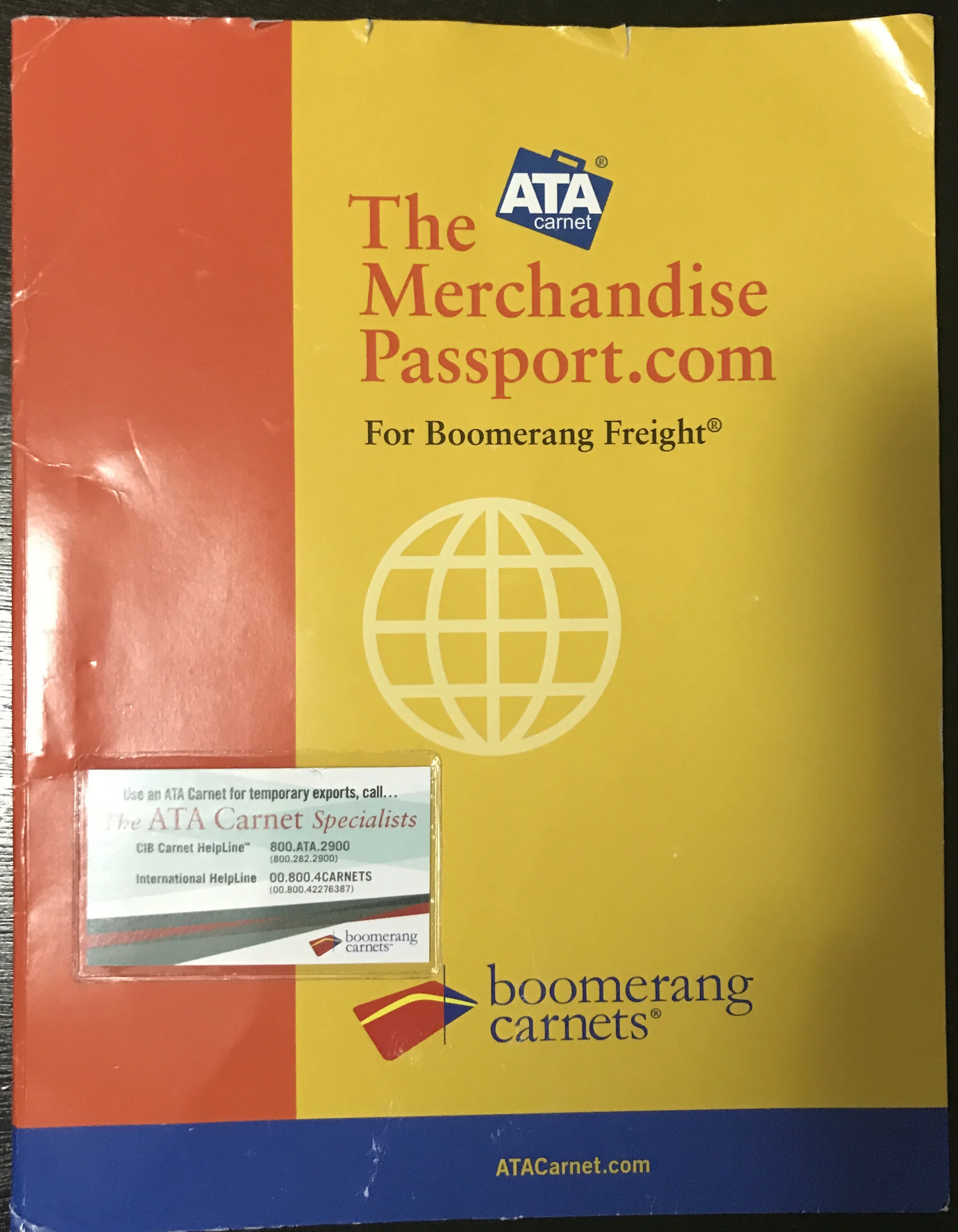
Are you traveling abroad as a cinematographer? If you are , you may have been asked to use a Carnet for equipment. A carnet (definition below) is a document you must apply for at www.atacarnet.com .
Recently I traveled to Australia (in July) and South Africa just this past week for NBA Africa Week in Johannesburg. When traveling to Australia, I did not use a carnet, because for the promo shoot we rented all gear in Australia. Why we opted to rent gear is simple, the baggage fees outweighed the cost of rental fees. For South Africa that was not the case and would of been far more of a hassle, because of the nature of the shoot. For NBA Africa week, I didn't need much gear, no lights, c stands or big camera set ups, just run and gun style with my c300. So long story short, I decided to do a carnet.
Wikipedia definition of Carnet: The ATA Carnet is an international customs document that permits the tax-free and duty-free temporary export and import of goods for up to one year. The Carnet eliminates the need to purchase temporary import bonds. So long as the goods are re-exported within the allotted time frame, no duties or taxes are due. Failure to re-export all or some of the goods listed on the Carnet results in the payment of applicable duties and taxes. Failure to remit those duties results in a claim from the foreign customs service to the importer's home country.
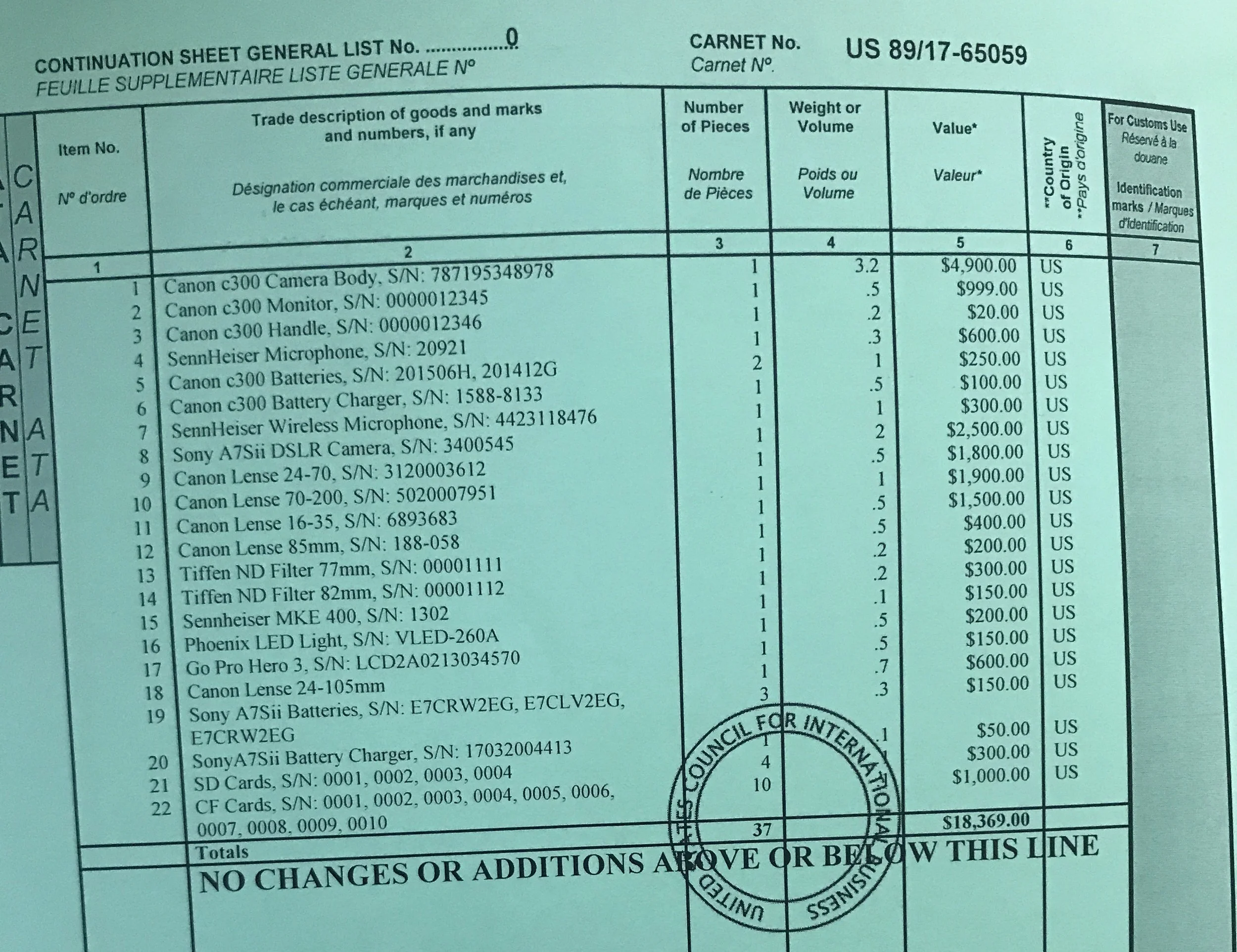
1. Apply for a carnet at www.atacarnet.com - First you list all of your gear items , with serial numbers, weight and quantity. After getting the document fed ex'ed to me within 24 hours, I listed 22 items (below). In hindsight I would of have only listed my c300, Sony A7sii and lenses. I was over cautious and listed all gear items, even CF cards! If you are traveling with just DSLR camera and lenses , you DO NOT need a carnet. However, I listed them to ensure nothing fishy would happened when going through customs, since I had a carnet already. If customs sees and extra camera (DSLR) not on carnet it potentially could cause an issue, mainly them thinking you are bringing in a camera to sell in their country.
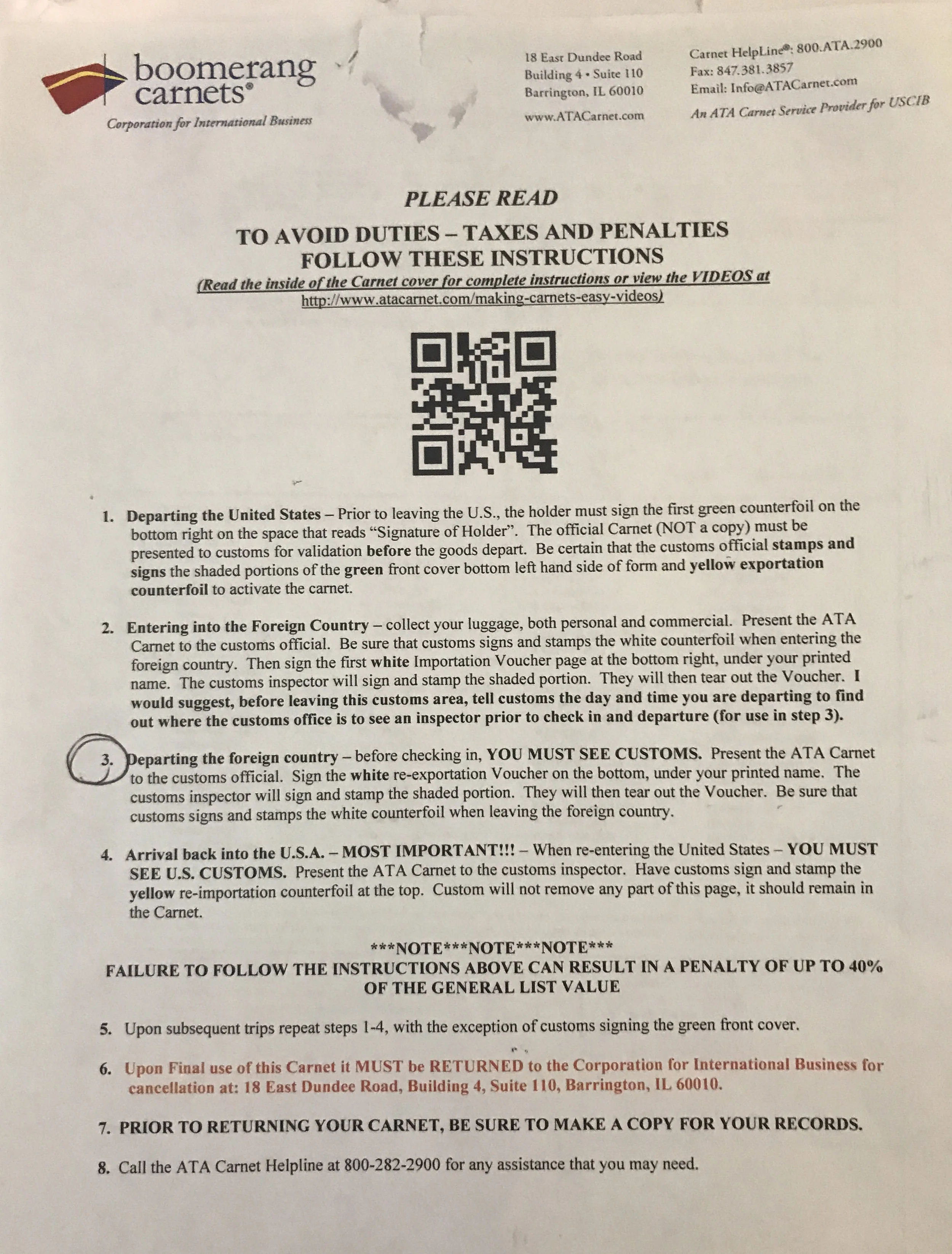
2. Ready to Travel - Boomerang Carnets really lays it out step by step and this sheet below is sent from heaven for first timers. It breaks down your trip in 4 steps, 1. Departing the US 2. Entering a Foreign Country 3. Departing Foreign Country and 4. Arrival Back to USA. Each step describes what you have to do and what the customs agent has to do. THE BEST ADVICE is get to each step very early, especially when departing foreign country (Step 3). And also keep in mind when entering the Foreign Country (Step 2) understand this may take long depending on the countries customs set up.
3. Home? Return the Carnet - Traveling with a Carnet is quite the hassle, but also a necessity for some jobs. When booking your flight back into the US, note you will go through customs the first time you land in the US. My flight was from South Africa to Atlanta to Los Angeles. I only had 1 hour and 30 minutes in between flight from Atlanta to Los Angeles. Needless to say this was a stressful situation and I should of left myself at least another hour. When I landed in Atlanta , I had to go through initial customs (like everyone else) , then after that I had to get my luggage and then head to the Customs office to handle the carnet. So I had to wait in line while time ticked away to get carnet inspected. After passing carnet , which ended up being quicker than I thought I had to take a train to go from Gate F to Gate A and was one of last to board plane!
Now its time to return the carnet (see step 6 above). Any questions on a carnet please email me thanasispetrakis@yahoo.com .