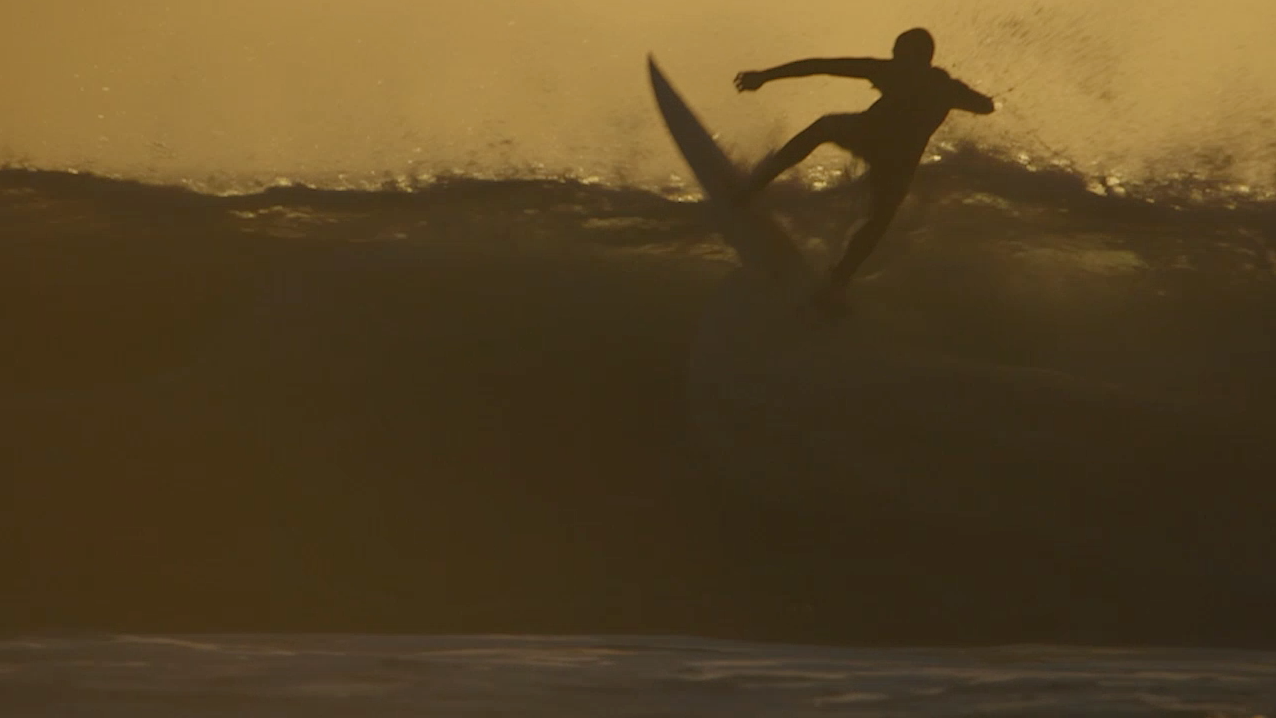
Passion Projects - (Ray Robinson Documentary)

If you are going to enter the world of production, it has to be something you love to do.  However, a lot of times when you are filming for a client, you do not get to express your creative side to the fullest or execute your vision.  So, in order to make sure you get better and scratch your creative itch ... you must do Passion projects.  Another great part of passion projects is experience, no one will pay you to film something until you prove you can do it.

Last year, I met Ray Robinson while filming Eddie Alvarez for UFC Embedded.  After hearing Ray's story I felt compelled to give him the exposure he needed.  The fight game is obviously a lot about skills in the ring/octagon , but there is also a huge factor that effects a fighter's career and that's marketing/exposure. 
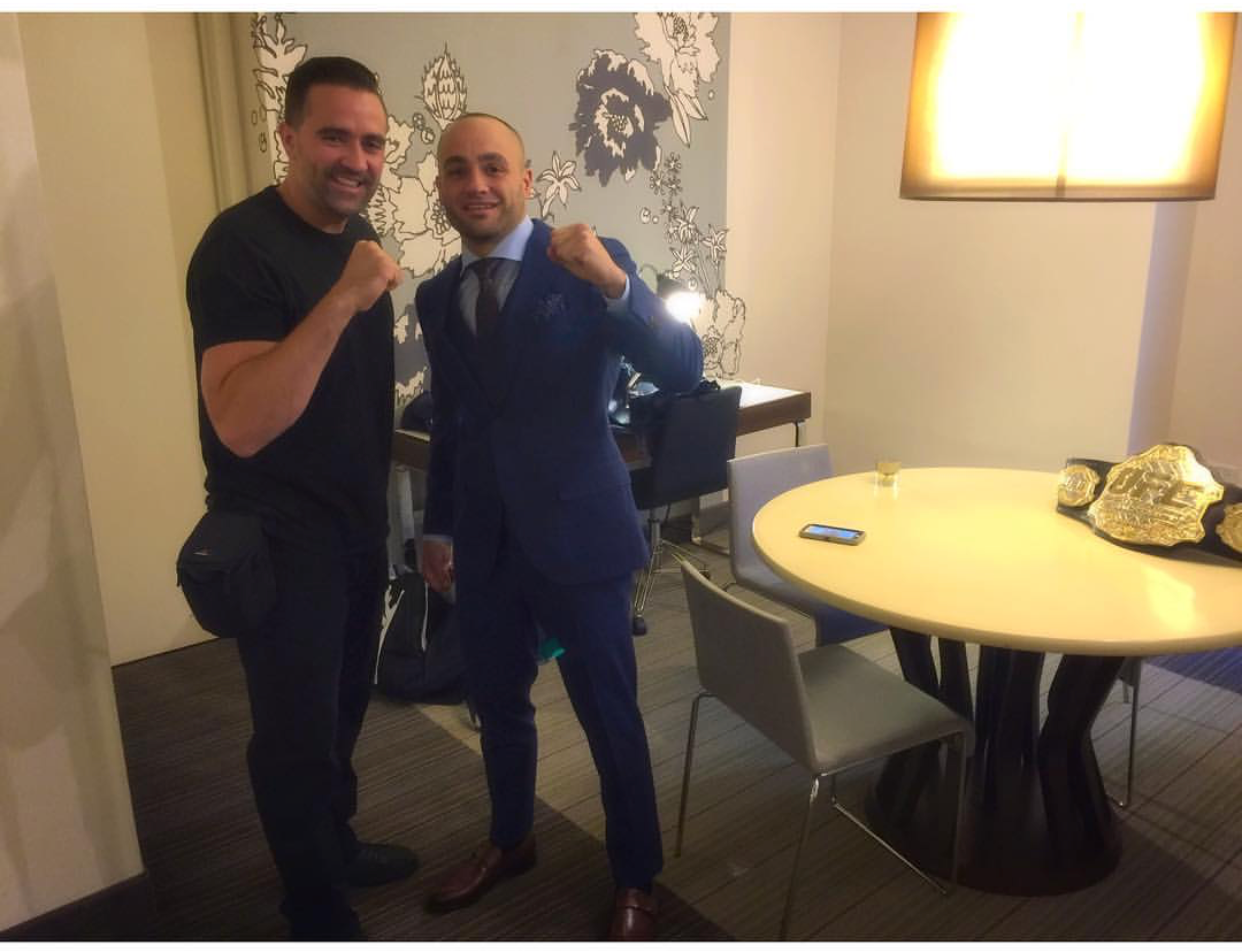
Thanasis Petrakis and Eddie Alvarez | UFC Embedded, 205

Thanasis Petrakis and Eddie Alvarez | UFC Embedded, 205

When discussing this doc idea with Ray, I knew we would have to film re-creation scenes in order to capture his story, because he was so poor there were few to no pics from his childhood.  As of now, I mostly get hired to film documentary style content, not re-creation scenes or with actors at all.  But for this story, it was imperative and it would also allow me to practice those skills for the future.  Even though the recreation scenes were fairly simple, there were many details I never had to deal with before.  Whether it be the actors, locations to film or even props.  When filming documentaries , its usually just following the action.  Now, in this scenario I had to think like a Director, Art Director, Props Designer, etc.  Tapping it into those other areas of filmmaking will only get you better.
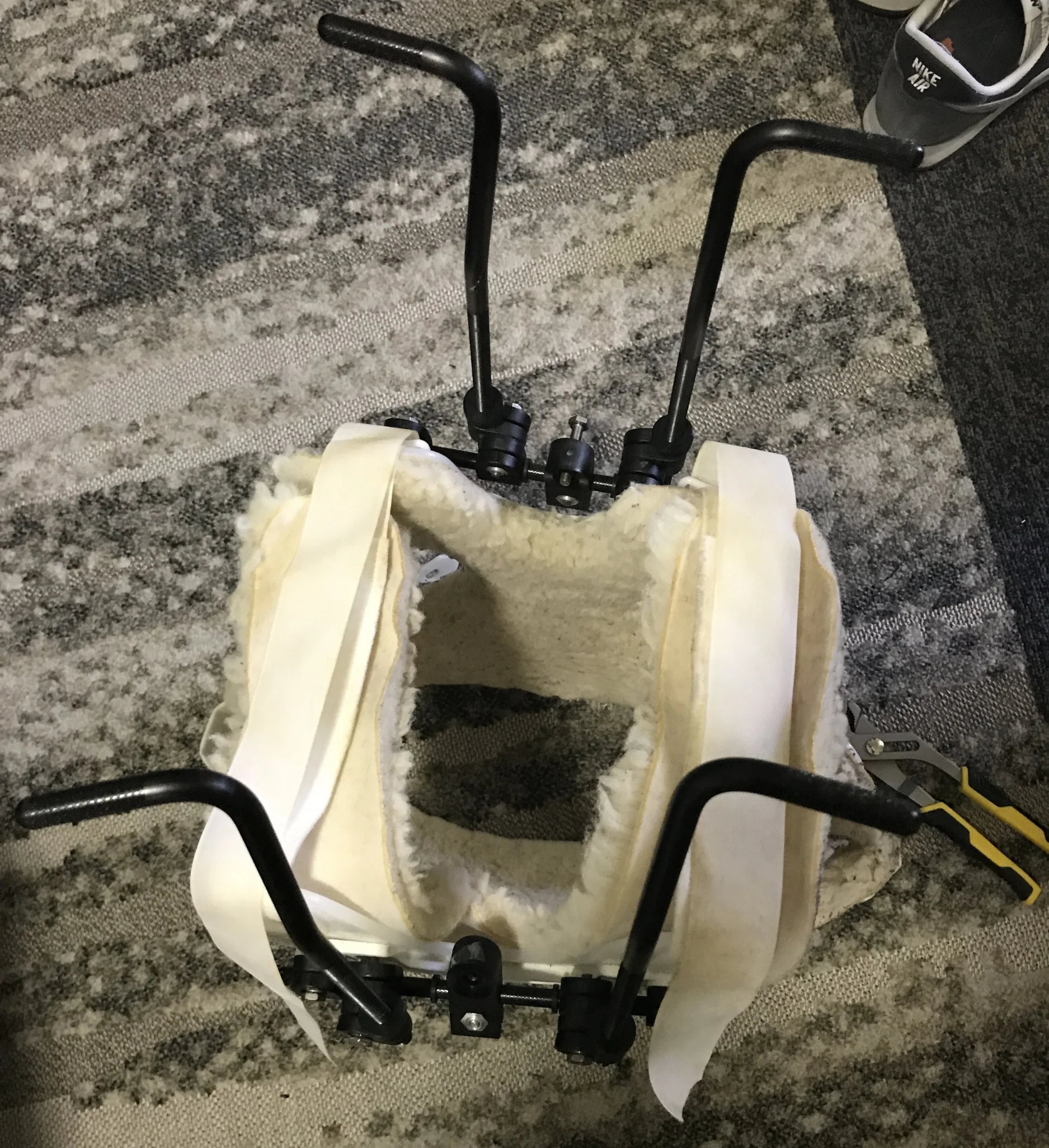
Prop bought off of eBay for neck brace in re-creation scenes with 13/14 yr old Ray.

Prop bought off of eBay for neck brace in re-creation scenes with 13/14 yr old Ray.

While filming this doc, the biggest challenge was distance.  Doing a project with no budget, and living across the country from the subject is extremely difficult (LA/Philly).  The first thing I did was when I met up with Ray in February of 2017 was film the master interview.  Again, no budget on this project, so I would be editing the documentary myself ... doing the interview first was crucial to getting the process going.  Sometimes just getting started is the toughest part.  The reason the interview was so important to start was that I needed to start editing, this way I can figure out what I need to film down the road. 
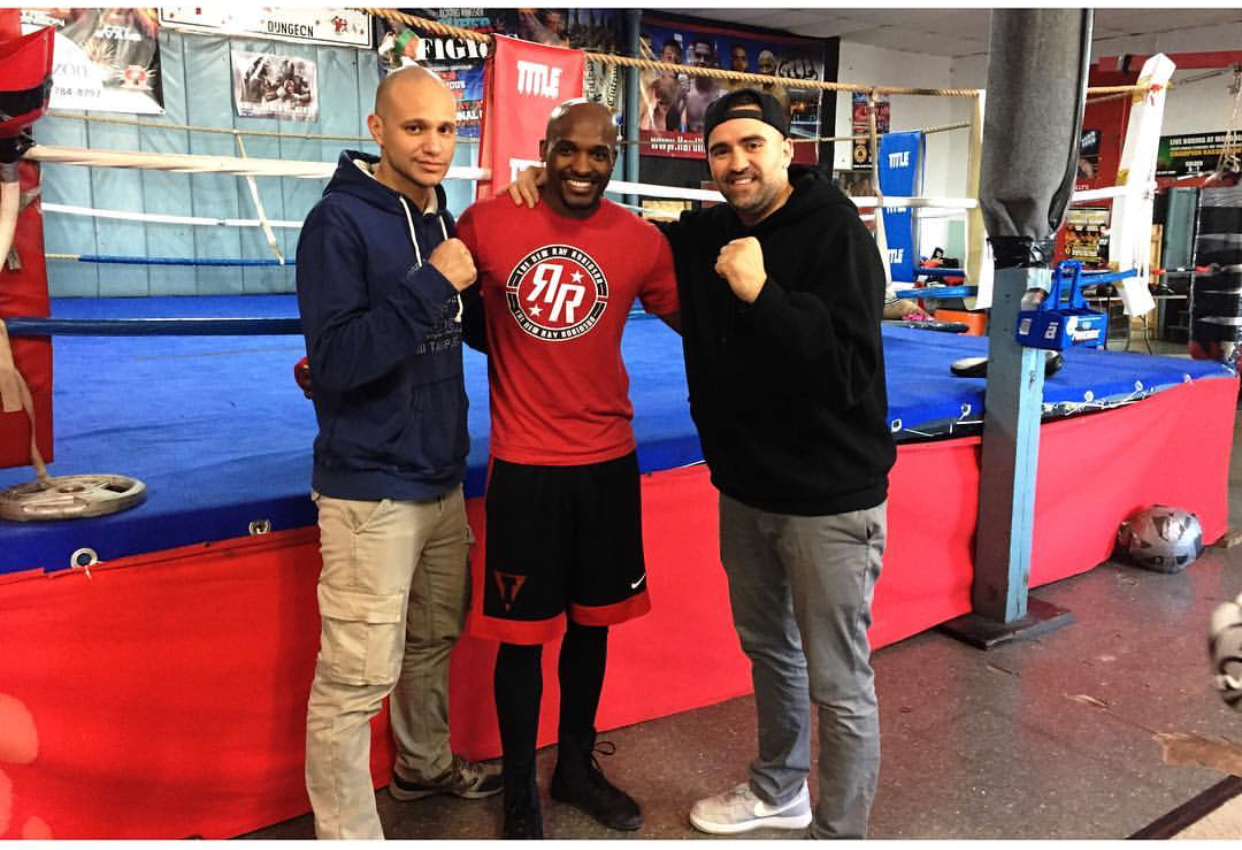
Left to Right: Rob Carbuccia (Director of Photography), Ray Robinson, Thanasis Petrakis (Director).  1st Day Filming 'The New Ray Robinson'

Left to Right: Rob Carbuccia (Director of Photography), Ray Robinson, Thanasis Petrakis (Director).  1st Day Filming 'The New Ray Robinson'

Once, the edit was underway I had figure out his story and what needed to be filmed to tell his story (both recreations and new current day scenes).  I went back to Philly in July to film all these scenes, but again no budget.  So, I had to be extremely efficient with my time.  I created a shoot schedule for 2.5 days (pic of Day 1 below).  With the help of 2 colleagues (Anthony Kuzviwanza, Brian Collins) we shot enough in those 3 days to finish a 30 minute documentary on Ray.
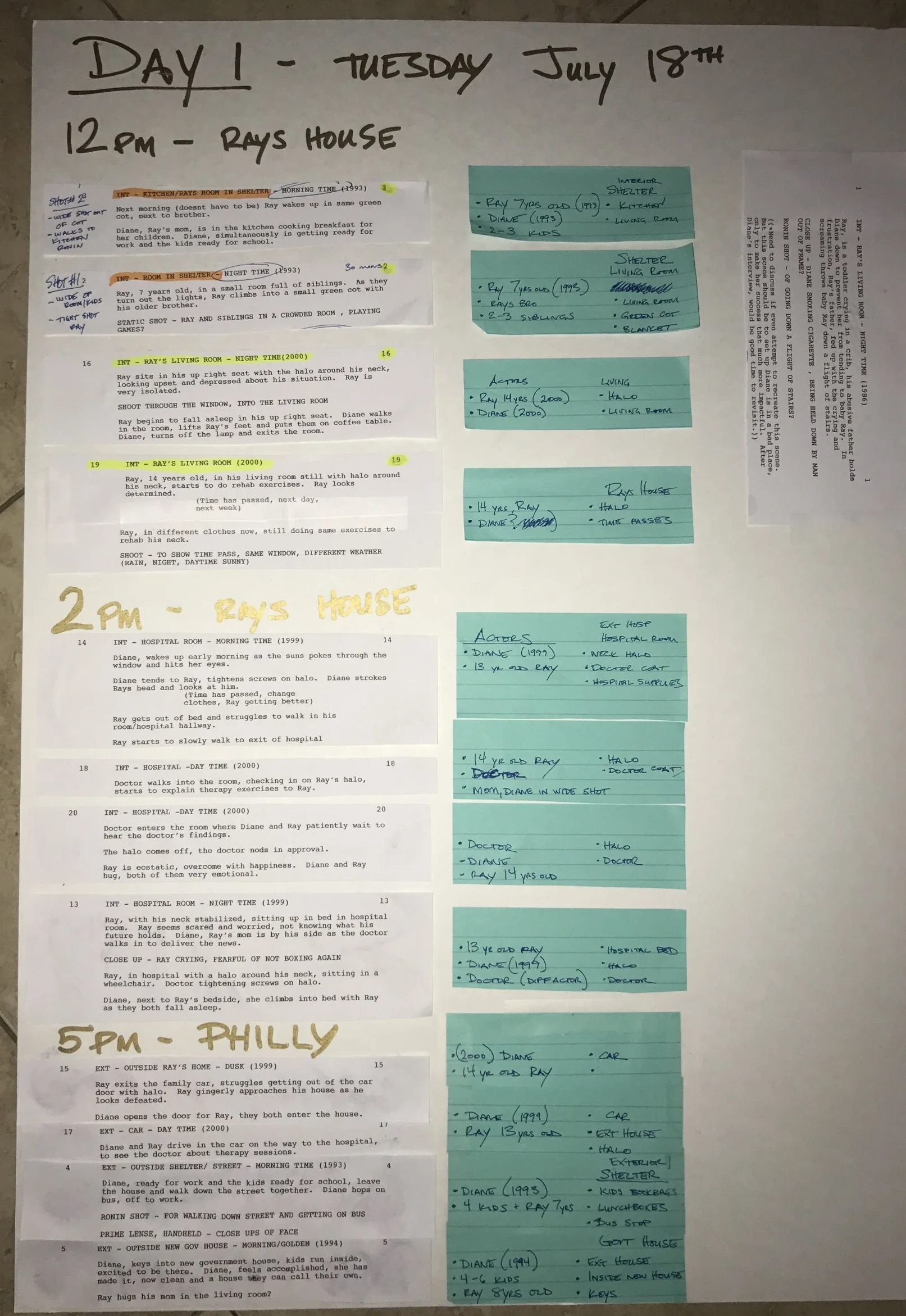
IMG_1884.JPG

The biggest thing I learned from this process was ORGANIZATION.  You must organize by location, time of day, actors availability, etc.  Obviously with smaller budgets you must be flexible in all those areas.  We became very flexible, we had to scrap the initial plans on the first day because we found out one of the actors was only available for one day.  Again, no budget so hard to be upset or not understanding.  Everyone involved was essentially apart of the project to help Ray and get his story told.  At this point, I had a rough cut/storyboard of the documentary, so I prioritized the scenes I absolutely needed for the doc to be complete.
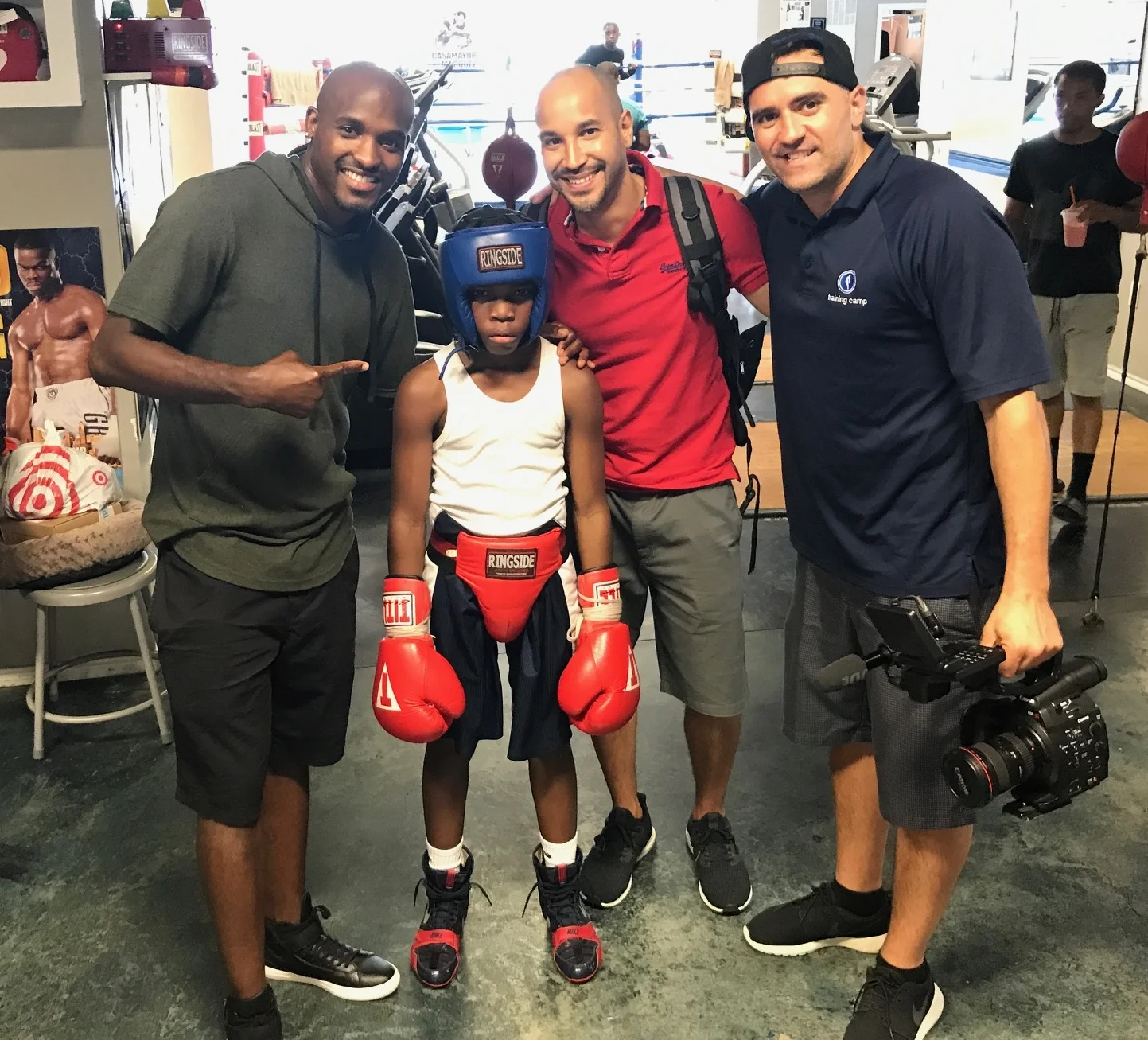
Left to Right: Ray Robinson, Semaj Alston (Actor) , Brian Collins (Camera Op), Thanasis Petrakis

Left to Right: Ray Robinson, Semaj Alston (Actor) , Brian Collins (Camera Op), Thanasis Petrakis

Below is a full documentary on Ray Robinson, whose story is a great lesson for people to continue to work hard to become successful.  Ray's upbringing was a homeless shelter, with an abusive father, who was addicted to drugs, a recovering drug addict mother, its easy to say Ray should not be the success he is today.
MAY/MAC: FIGHT OF THE CENTURY (Covering Arrivals)

If you are going to enter sports cinematography/photography you will definitely have to cover athletes arrivals to games/events.  In every sport its an opportunity for access to the athletes the fans at home do not normally see in the broadcast (or if they do its for a few seconds).  With the NBA, I am usually obligated to ask players questions as they arrive or get them to talk to the camera.  Boxing/UFC that is not what is asked of the shooters, the goal to cover this arrival was to capture Mayweather and the atmosphere around him at sync speed (24 frames per second with audio).  The footage would ultimately be for the epilogue episode of Showtime's All Access.  I was one of several cameras covering the event for the All Access Show, other cameras filming arrival for show are shooting slow motion for beauty shots.  No matter your assignment and no matter what sport, a rule that always applies to all situations is making sure the broadcast camera has top priority for best position and you stay out of their way.  Broadcast camera is the live camera for the viewers at home, they are spending the money, which is why they are priority.  Broadcast cameras will have an assistant handling the cable attached to their camera and will guide them as they walk.  Below is a video from a go pro and from my Canon c300 marki , so you can see some of the behind the scenes in covering an arrival.

:00 - Go Pro angle of waiting on Mayweather's arrival.   Camera is low to ground (resting on ground) for an establishing shot of the SUV arriving.

:08 - c300 establishing shot of Mayweather's SUV arriving.

:13 - REPOSITIONING - After landing the establishing shot for several seconds, I reposition in front of the door where Mayweather will come out of car.  Slow mo camera to left of me, also getting arrival.

:42 - REPOSITION AGAIN - When covering Floyd, there is always a ton of people around him , so if you want to keep on getting shots as he advances you have to keep getting ahead of him.  You can also see on the go pro camera that I readjust the monitor on camera.  There is more media waiting behind the security tent, so I know I will have to raise my camera above the crowd, so I flipped monitor for better view when raising camera.

1:00 - REPOSITION AGAIN - This time we are going inside , which means white balance and exposure will change.  Exposure is somewhat easy to change in this situation , because the c300 has ND filters built in to camera, so I just take those off as I go inside.    The biggest change is in white balance, outside was around 6000K , inside was closer to 4000K , so I changed white balance on way through the door.

1:08 - Now we are inside and SHOWTIME's broadcast camera is waiting , they have priority so I try to position next to them to not get in their shot.

1:19 - And then check out how cool and calm Mayweather is a couple of hours before the entire world is watching him.

Traveling Internationally ... Do I need a carnet?

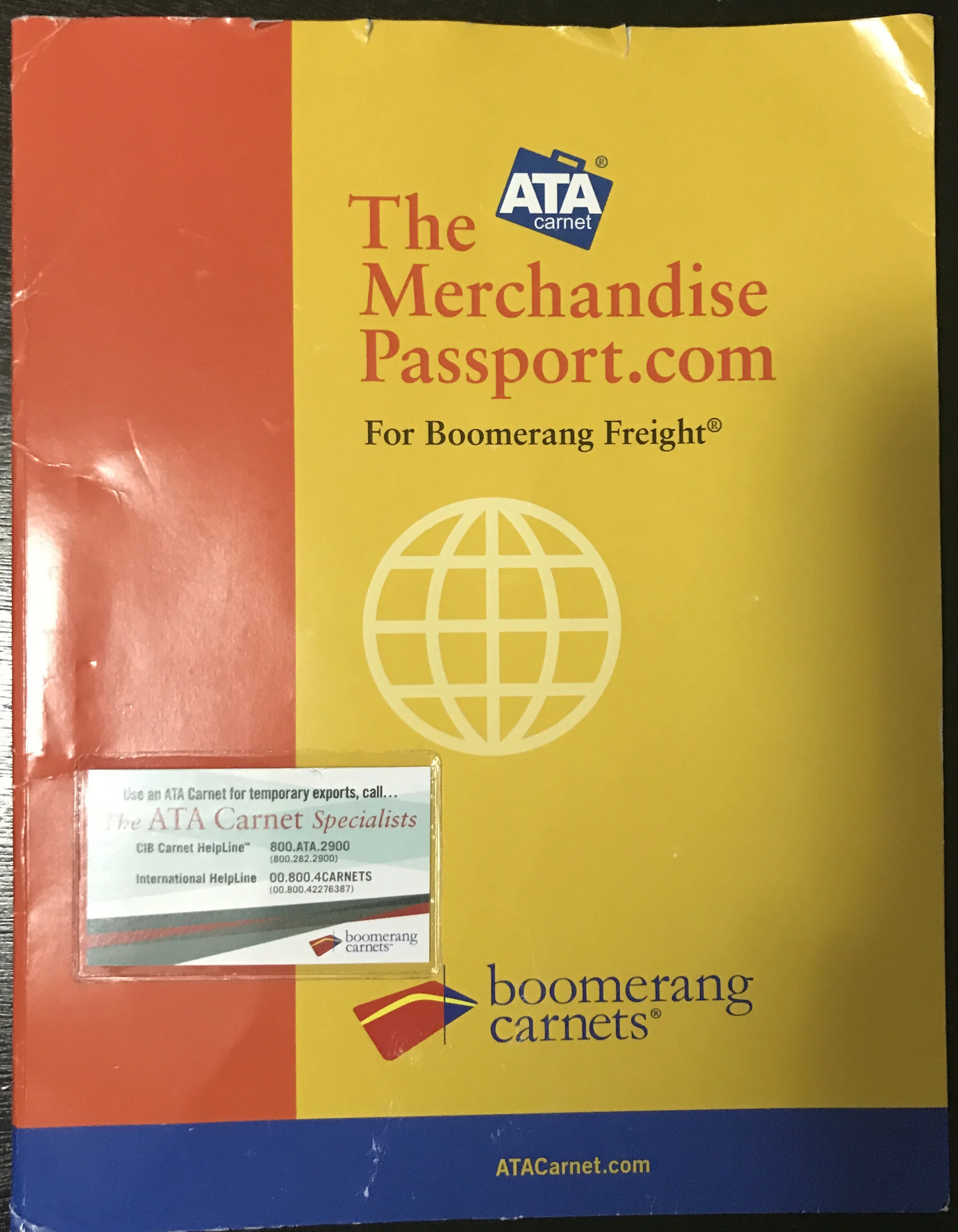
Are you traveling abroad as a cinematographer?  If you are , you may have been asked to use a Carnet for equipment.  A carnet (definition below) is a document you must apply for at www.atacarnet.com .

Recently I traveled to Australia (in July) and South Africa just this past week for NBA Africa Week in Johannesburg.  When traveling to Australia, I did not use a carnet, because for the promo shoot we rented all gear in Australia.  Why we opted to rent gear is simple, the baggage fees outweighed the cost of rental fees.  For South Africa that was not the case and would of been far more of a hassle, because of the nature of the shoot.  For NBA Africa week, I didn't need much gear, no lights, c stands or big camera set ups, just run and gun style with my c300.  So long story short,  I decided to do a carnet.  

  1. Wikipedia definition of Carnet: The ATA Carnet is an international customs document that permits the tax-free and duty-free temporary export and import of goods for up to one year. The Carnet eliminates the need to purchase temporary import bonds. So long as the goods are re-exported within the allotted time frame, no duties or taxes are due. Failure to re-export all or some of the goods listed on the Carnet results in the payment of applicable duties and taxes. Failure to remit those duties results in a claim from the foreign customs service to the importer's home country.

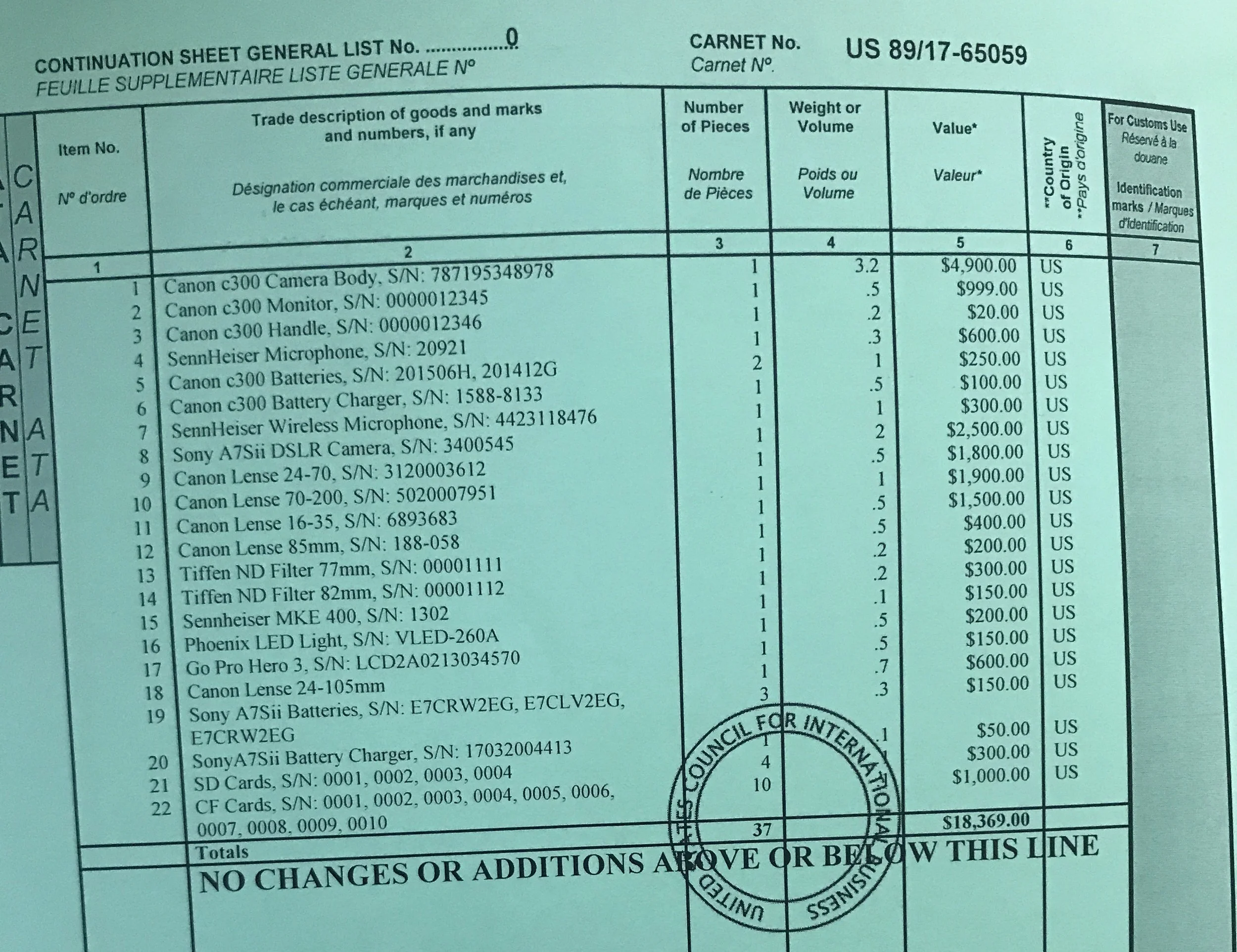
1.  Apply for a carnet at www.atacarnet.com - First you list all of your gear items , with serial numbers, weight and quantity.  After getting the document fed ex'ed to me within 24 hours, I listed 22 items (below).   In hindsight I would of have only listed my c300, Sony A7sii and lenses.  I was over cautious and listed all gear items, even CF cards!  If you are traveling with just DSLR camera and lenses , you DO NOT need a carnet.  However, I listed them to ensure nothing fishy would happened when going through customs, since I had a carnet already.  If customs sees and extra camera (DSLR) not on carnet it potentially could cause an issue, mainly them thinking you are bringing in a camera to sell in their country.


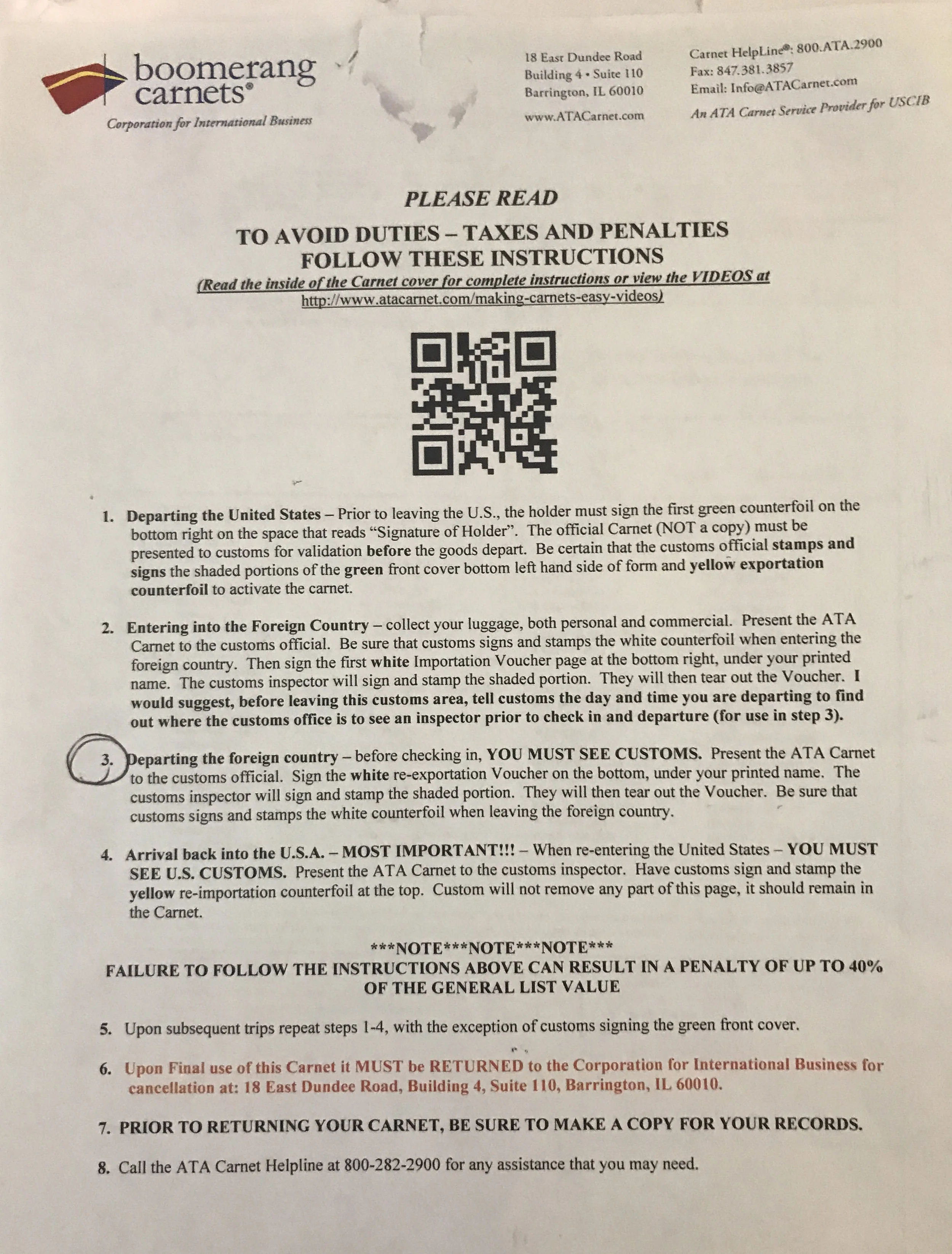
2.  Ready to Travel - Boomerang Carnets really lays it out step by step and this sheet below is sent from heaven for first timers.  It breaks down your trip in 4 steps, 1.  Departing the US 2.  Entering a Foreign Country 3.  Departing Foreign Country and 4. Arrival Back to USA.  Each step describes what you have to do and what the customs agent has to do.  THE BEST ADVICE is get to each step very early, especially when departing foreign country (Step 3).  And also keep in mind when entering the Foreign Country (Step 2) understand this may take long depending on the countries customs set up.  

3.  Home?  Return the Carnet - Traveling with a Carnet is quite the hassle, but also a necessity for some jobs.  When booking your flight back into the US, note you will go through customs the first time you land in the US.  My flight was from South Africa to Atlanta to Los Angeles.  I only had 1 hour and 30 minutes in between flight from Atlanta to Los Angeles.  Needless to say this was a stressful situation and I should of left myself at least another hour.  When I landed in Atlanta , I had to go through initial customs (like everyone else) , then after that I had to get my luggage and then head to the Customs office to handle the carnet.  So I had to wait in line while time ticked away to get carnet inspected.  After passing carnet , which ended up being quicker than I thought I had to take a train to go from Gate F to Gate A and was one of last to board plane!   

Now its time to return the carnet (see step 6 above).  Any questions on a carnet please email me thanasispetrakis@yahoo.com .

2017 NBA FINALS

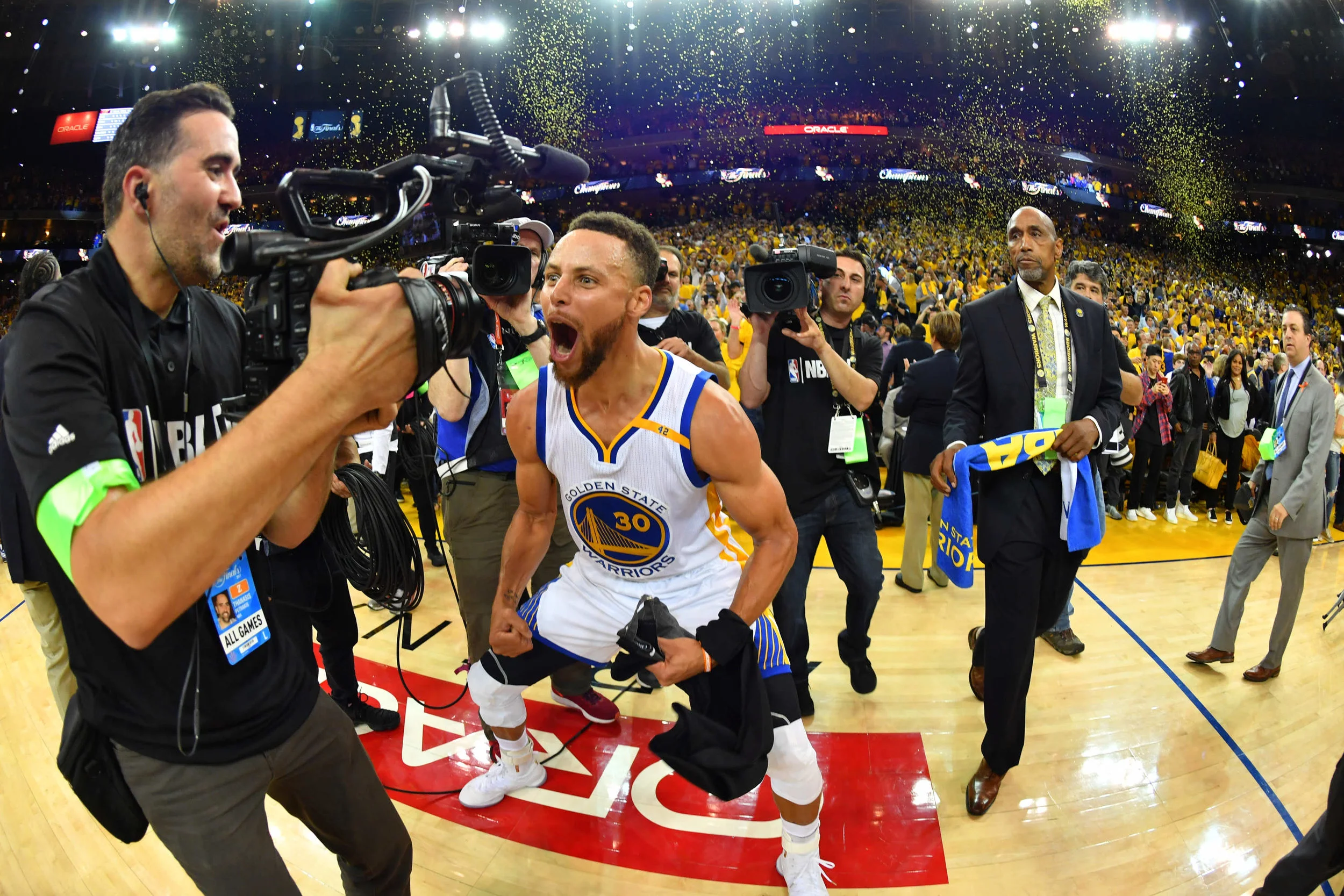
This year I had the honor to cover the NBA Finals again for NBA Entertainment.  2 Weeks on the road of traveling and shooting the best basketball players in the world, not bad.  The Finals is extremely tough to cover as an event in whole, way tougher than regular season or any playoff round.  The reason from the media stand point why its harder , is simple ... way more cameras, journalists, and media members in record numbers cover the finals and make it hard to get access with players and move around the arena in general.  Also, security is always heightened throughout the arena, so moving around and covering multiple areas is 10 times harder than normal.

Below is a link to some postgame elements I captured as the 'at speed sound camera' (shooting 24 fps).  The camera I am using is a Canon c300 marki (a versatile documentary camera).  While on the court ... I'm shooting with an ND Filter of 2 stops, F Stop at 2.8, ISO 500/640, 180 degree shutter.  Mostly every arena in the NBA when shooting at 24 fps you will want to have an ND Filter so you can shoot at the lowest F Stop. 

Every shot in the link except one is from Canon 16-35mm , the trophy shot is Canon 24-70, because I was stuck in the crowd and could not get close to the stage.  Whenever I have to capture moments like this, I mainly stay with a 16-35 to ensure I can get wide enough to get the scene.  The last clip on on the celebration link is a shot of KD getting out of his car and being embraced by fans, perfect example of why you want a wide lense.  A 24-70 on at this moment and I wouldn't be wide enough to see all the fans chanting his name, which to me made the scene.

UFC 211 - Embedded Episode 3 - Junior Dos Santos

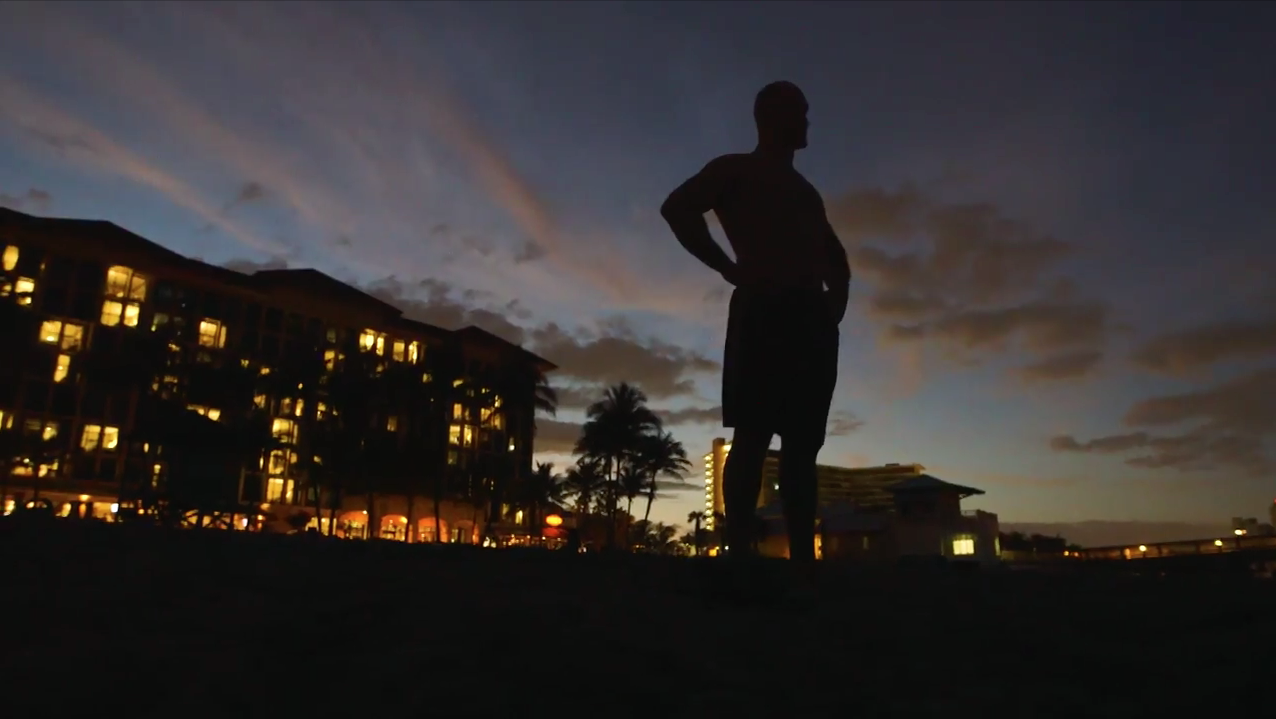
Below is Episode 3 of Embedded 211 , a web series designed to promote the PPV cards for each UFC show.  During this series (May 2nd - 13th) I followed Junior Dos Santos, who was chasing the heavy weight title.  The opening scene of this episode was shot about 30 minutes after the sun went down and light was being lost by the minute.  To get proper exposure on Junior's face would of blown out the background in this scene.  It turned out to look okay and the Canon c300 held up pretty good even at a 10,000 iso, but once he went by the water he almost disappeared.  I switched to the "plastic fantastic" at that point, a very cheap 50mm prime lense that gave me an extra stop of light , 1.8.  Before that I was on the canon 16-35mm , which is a 2.8.

12.02.16 - Manhattan Beach at the Golden Hour

Shot with the Canon c300 mark at 60 fps with the Sigma 50-500 at around 4pm - 5pm on December 2nd.  Manhattan Beach is an absolutely beautiful neighborhood and when you mix that with the best light God could create , you get pretty images ....